How Yoga Quietly Transformed My Health Mindset
For years, I chased fitness with intensity—hard workouts, strict diets, measurable results. But real health consciousness didn’t click until I stepped onto a yoga mat. It wasn’t about burning calories; it was about tuning in. Through breath, stillness, and movement, I began to feel my body rather than just change its shape. This shift in awareness changed everything—from stress levels to sleep, focus, and daily choices. What started as an experiment in flexibility grew into a quiet revolution in how I understand health. It wasn’t a dramatic overhaul, but a gradual awakening to the signals my body had been sending all along.
The Wake-Up Call: Recognizing the Gap in My Fitness Journey
Like many women in their 30s and beyond, I approached health as a checklist. Did I hit my step count? Did I avoid sugar? Did I complete today’s workout? My routine revolved around external goals—slimmer jeans, stronger arms, a more defined core. I spent years in gyms, following high-intensity interval training and strength circuits with discipline. I tracked macros, monitored progress photos, and celebrated when the scale dropped. On paper, I was healthy. But inside, I often felt frayed—tense in my shoulders, restless at night, mentally overwhelmed by the constant effort to maintain control.
The turning point came during a particularly stressful season. Work demands had increased, family responsibilities piled up, and despite my active lifestyle, I was experiencing frequent headaches, poor sleep, and a low-grade anxiety that lingered like background noise. A friend invited me to a gentle yoga class, assuring me it wasn’t about performance. Skeptical but willing, I showed up. The room was dimly lit, the pace slow. We weren’t jumping or lifting; we were breathing, moving with intention, and holding poses that asked for presence, not power.
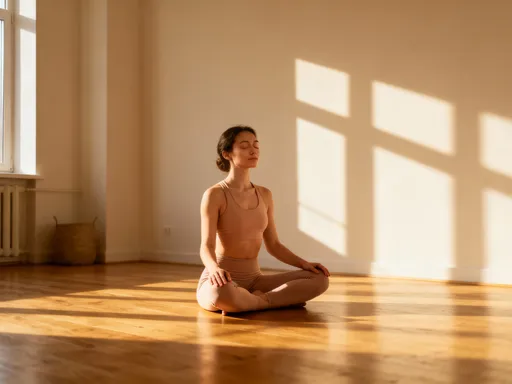
Halfway through the session, something shifted. As I settled into a simple seated posture, focusing on the rise and fall of my breath, I noticed sensations I had long ignored—tightness across my chest, a subtle tremor in my hands, the weight of unspoken worry. For the first time in years, I wasn’t trying to fix anything. I was simply noticing. That moment of stillness cracked open a realization: I had been treating my body like a machine to be tuned, rather than a living system to be understood. Health, I began to see, wasn’t just about how I looked or performed. It was about how I felt—moment to moment, breath to breath.
Yoga Beyond Stretching: Rethinking What Exercise Can Do
Many people think of yoga as stretching with mantras. While flexibility is a benefit, it’s only a small part of what yoga offers. Unlike many forms of exercise that emphasize output—calories burned, reps completed, pace achieved—yoga focuses on input: how the body responds, how the breath flows, how the mind settles. It’s a form of mindful movement that engages not just muscles, but the nervous system, the breath, and the quality of attention.
One of the most important distinctions lies in how yoga affects the body’s stress response. High-intensity workouts, while valuable, can elevate cortisol—the stress hormone—especially when performed frequently without adequate recovery. In contrast, yoga activates the parasympathetic nervous system, often called the “rest and digest” mode. This shift helps lower heart rate, reduce blood pressure, and calm the mind. The key mechanism? Diaphragmatic breathing. When we breathe deeply into the belly, we send a signal to the brain that all is well, which in turn reduces the production of stress hormones.
Research supports this. Studies have shown that regular yoga practice is associated with measurable reductions in cortisol levels, improvements in heart rate variability (a marker of resilience), and enhanced regulation of the autonomic nervous system. But beyond the data, there’s a lived experience: the sensation of release after a long day, the mental clarity that follows a morning flow, the deep rest that comes not from exhaustion, but from true relaxation. Yoga doesn’t just improve physical fitness—it teaches the body how to recover, how to reset, how to return to balance.
Another often-overlooked benefit is the development of interoception—the ability to perceive internal bodily states. Most of us are skilled at noticing external cues—what others think, how we look in photos—but less attuned to internal signals like fatigue, hunger, or emotional tension. Yoga strengthens this inner awareness. Holding a pose, for example, isn’t just about endurance; it’s an invitation to notice where tension arises, how the breath changes, when the mind starts to resist. Over time, this builds neuromuscular control and a deeper connection between mind and body.
The Mind-Body Shift: From “Fixing” to “Feeling”
Before yoga, my relationship with my body was largely corrective. I saw it as something to be fixed—too soft here, too stiff there, not strong enough, not lean enough. Movement was often driven by a sense of inadequacy, a belief that if I just pushed harder, I could mold myself into an ideal version. But yoga introduced a radical alternative: the idea that the body is not a problem to be solved, but a companion to be listened to.
This shift didn’t happen overnight. It began with small observations. I started to notice how my shoulders crept up toward my ears when I was stressed. I became aware of how often I held my breath while working at the computer. I realized that fatigue wasn’t just physical—it carried emotional weight, showing up as irritability or mental fog. Instead of pushing through these signals, yoga taught me to pause, to acknowledge them without judgment, and to respond with care.
This practice of self-awareness extended beyond the mat. I found myself making choices not out of obligation, but out of a growing sense of attunement. If I was truly tired, I chose rest over another workout. If I felt emotionally drained, I allowed myself to step back instead of powering through. This wasn’t laziness—it was a form of respect. I was learning to treat my body with the same compassion I would offer a dear friend.
Yoga also changed my relationship with discomfort. In the past, I had equated pain with progress—no pain, no gain. But yoga introduced the concept of “edge,” the point where challenge meets awareness. It’s not about pushing into pain, but about finding the boundary where growth happens without harm. This principle reshaped how I approached not just movement, but life. I became more patient, more willing to sit with uncertainty, more accepting of imperfection. The goal was no longer perfection in a pose, but presence within it.
Building Health Consciousness: Awareness That Spills Into Daily Life
One of the most surprising outcomes of my yoga practice was how its benefits extended far beyond the hour on the mat. I began to notice subtle shifts in my daily habits—choices I hadn’t even realized were influenced by my growing body awareness. For example, I started paying more attention to how different foods made me feel. Instead of eating based on rules or restrictions, I tuned into my body’s responses. I noticed that heavy meals left me sluggish, while balanced, whole foods supported steady energy. This wasn’t about dieting; it was about listening.
Posture was another area of change. I used to slump at my desk for hours, only realizing my back hurt when the discomfort became impossible to ignore. But after months of yoga, I began to catch myself before the pain set in. A simple cue—“shoulders down, spine long”—would bring me back to alignment. This wasn’t about forcing perfect posture; it was about cultivating a habit of checking in. Similarly, I started taking short movement breaks throughout the day, not because I had to, but because my body asked for it.
Emotional regulation also improved. Yoga taught me to pause before reacting—whether to a stressful email, a family disagreement, or an unexpected setback. That brief moment of breath awareness created space between stimulus and response, allowing me to choose how to act rather than react. I became less reactive, more thoughtful. Sleep improved too. Evening breathwork and gentle stretches helped quiet the mind, making it easier to transition into rest. Hydration, once an afterthought, became a natural priority as I became more attuned to how my body functioned best.
These changes weren’t the result of a rigid health plan. They emerged organically from a deeper sense of awareness. Health consciousness, I realized, isn’t about following a set of rules. It’s about developing an inner compass—a way of navigating daily life with greater sensitivity to what truly supports well-being.
Practical Integration: Making Yoga Work for Real Schedules
One of the biggest misconceptions about yoga is that it requires a lot of time, special equipment, or advanced flexibility. I believed this too, until I discovered that even small, consistent practices can yield meaningful results. When I first started, I committed to just ten minutes a day. That might mean a short sequence of sun salutations in the morning, a few minutes of diaphragmatic breathing before bed, or a seated meditation during a lunch break. The key was consistency, not duration.
Over time, I found ways to weave yoga into my existing routine. I paired a short flow with my morning coffee ritual—moving while the kettle heated. I used a yoga app for guided sessions when I didn’t know what to do. On busy days, I focused on breathwork alone, using simple techniques like box breathing (inhale for four, hold for four, exhale for four, hold for four) to reset my nervous system. The goal wasn’t perfection, but presence.
I also learned to choose styles that fit my needs. Some days called for a dynamic vinyasa flow to energize the body. Other days, a restorative or yin practice—where poses are held for several minutes with support—provided the deep release I craved. There’s no one “right” way to practice. The beauty of yoga lies in its adaptability. Whether standing in a small apartment, sitting in an office chair, or lying on a bedroom floor, the practice can meet you where you are.
For women managing households, careers, and family demands, this flexibility is essential. You don’t need a perfect space or a full hour. You don’t need to wear expensive clothes or master difficult poses. You simply need a willingness to show up, even if only for a few breaths. Over time, those moments accumulate, building resilience, clarity, and a stronger connection to yourself.
Science Meets Experience: What Research Says About Yoga’s Impact
While personal experience is powerful, it’s reassuring to know that yoga’s benefits are supported by scientific research. Numerous studies have examined its effects on physical and mental health, with consistent findings. For example, a meta-analysis published in the Journal of Clinical Psychology found that yoga significantly reduces symptoms of anxiety and depression. Other research shows improvements in sleep quality, particularly among women experiencing stress or life transitions.
Cardiovascular health is another area of benefit. Studies have demonstrated that regular yoga practice can help lower blood pressure, improve circulation, and support healthy heart rate variability. Unlike high-impact exercise, which may not be suitable for everyone, yoga offers a low-risk, accessible way to support heart health. It also enhances balance and proprioception—critical for preventing falls, especially as we age.
Chronic pain management is another well-documented benefit. Research suggests that yoga can reduce pain and improve function in conditions like lower back pain, arthritis, and fibromyalgia. The mechanisms likely involve a combination of physical movement, stress reduction, and increased body awareness. Importantly, yoga is not a replacement for medical treatment, but a complementary practice that supports overall care.
It’s worth noting that benefits accumulate over time. While some people report feeling calmer after a single session, lasting changes—such as improved resilience, better sleep, or reduced anxiety—typically emerge with consistent practice over weeks or months. This isn’t a quick fix; it’s a gradual rewiring of how we relate to our bodies and minds. The science confirms what many practitioners already know: yoga is more than exercise. It’s a tool for cultivating sustainable well-being.
A Lifelong Practice: Redefining Health From the Inside Out
Yoga has taught me that health is not a destination to be reached, but a daily practice of awareness. It’s not something you achieve and then move on from. It’s something you return to, again and again, like breathing. What began as a curiosity has become a cornerstone of how I live—a quiet, steady presence that grounds me amid life’s constant changes.
I no longer measure my health by how I look in a mirror or how much weight I can lift. Instead, I ask: Do I feel grounded? Can I breathe deeply? Am I able to respond to challenges with calm rather than panic? These are the metrics that matter now. And they’re not fixed—they shift from day to day, requiring attention, kindness, and patience.
The practice has also deepened my sense of self-trust. I’ve learned to honor my limits, to celebrate small progress, and to accept that some days are for rest, others for effort. This isn’t about perfection. It’s about showing up, even when it’s hard. It’s about listening, even when the signals are subtle. It’s about choosing care over criticism, presence over performance.
For women navigating the complexities of midlife—balancing family, work, aging parents, and personal dreams—this kind of awareness is invaluable. It’s not about adding one more thing to the to-do list. It’s about transforming how we approach everything we already do. Yoga hasn’t changed my life in dramatic ways. It hasn’t erased stress or solved all my problems. But it has given me tools—breath, stillness, attention—that help me move through life with greater ease, clarity, and compassion. And that, I’ve come to realize, is what true health feels like.