Found My Kids Within Seconds Every Time: The Family Safety App That Changed Our Lives
Losing sight of your child in a crowded park or mall is every parent’s nightmare. I’ve been there—heart racing, voice trembling, calling their name over and over. But everything changed when I discovered one simple app that quietly became our family’s safety net. No more panic, no more endless searching. Just peace of mind, right in my pocket. If you’ve ever felt that split-second fear, you’ll understand why this made all the difference. It wasn’t magic, and it didn’t promise the impossible. It just worked—consistently, quietly, and exactly when we needed it most. And honestly? It’s changed how we move through the world together.
The Moment Everything Changed: A Real-Life Scare That Started It All
It was a Saturday morning at the farmer’s market—bustling, cheerful, full of music and the smell of fresh bread. My daughter, Lily, who was six at the time, was holding my hand one second and gone the next. I turned to look at a display of honey jars, and when I turned back, she wasn’t there. My heart dropped. I called her name, scanning every face, every stroller, every patch of shade under the tents. Ten minutes felt like an hour. My hands shook. I remember asking a vendor if they’d seen a little girl in a yellow dress. And then, finally, there she was—standing at the petting zoo corner, giggling as a goat nibbled her shoelace.
Relief washed over me, but so did guilt. How had this happened again? This wasn’t the first time. In fact, it was the third time in six months that we’d lost each other in a public space. Once at the library during story hour, once at a birthday party in a packed bounce house center. Each time, the panic was real. Each time, I told myself I’d be more careful. But here’s the truth: no matter how attentive you are, kids move fast. Crowds are unpredictable. And being ‘more careful’ only gets you so far.
That night, after tucking Lily in, I sat at the kitchen table with my laptop open. I typed in ‘best family safety app’ and started reading. Not flashy ads, not influencer reviews—but real parent forums, tech blogs, and consumer reports. I wanted something that didn’t just sound good but actually worked in real life. Something that wouldn’t fail when the signal was weak or the battery was low. I wasn’t looking for a miracle. I just wanted to stop living in fear every time we left the house.
Why Most Family Safety Apps Fall Short in Real Situations
I tested four different apps over the next few weeks. One promised real-time tracking but only updated location every ten minutes—useless when a child moves across a park in under a minute. Another drained my phone’s battery so fast I had to carry a power bank everywhere. A third had a clunky interface that made it hard to see my kids’ locations at a glance. And one? It showed my son was at school when he was actually two blocks away at a friend’s house. That kind of inaccuracy isn’t just frustrating—it’s dangerous.
What I quickly learned is that many family safety apps are built more for marketing than for real-world use. They highlight features like ‘GPS tracking’ and ‘instant alerts’ but don’t account for everyday realities: spotty Wi-Fi, weak cellular signals, kids forgetting to charge their devices, or parents juggling multiple screens during busy days. Some require constant manual check-ins, which defeats the purpose when you need automatic monitoring. Others lack geofencing, meaning you don’t get notified when a child leaves a safe area—like the schoolyard or the playground.
Then there were the privacy concerns. Some apps asked for access to way more data than I was comfortable giving. One even suggested linking to social media accounts—absolutely not. I wasn’t looking to broadcast my family’s whereabouts. I wanted a private, secure way to know my kids were safe. And I realized that many apps create a false sense of security. They make you think you’re protected, but when you actually need them, they fall short. That’s when I found the one that worked—simple, reliable, and built with real families in mind.
How the Right App Works: Simplicity, Speed, and Silent Protection
The app I finally settled on doesn’t have flashy graphics or a long list of ‘premium features.’ It’s clean, quiet, and always on. It uses background location services intelligently—updating every 15 seconds without draining the battery. I’ve had it running all day during school hours, errands, and weekend outings, and my phone still has plenty of charge by bedtime. That was a game-changer. I didn’t want to trade one worry for another.
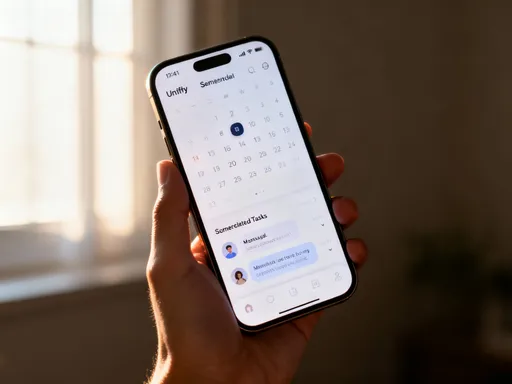
Here’s how it works: I set up safe zones—home, school, my parents’ house, and the aftercare center. When any of my kids leaves one of those areas, I get an instant notification. Not five minutes later. Not after I open the app. Immediately. And if they’re somewhere I don’t expect them, I can open the app and see their exact location on a simple map. No zooming, no guessing. Just clarity.
It’s not just for emergencies. On regular days, it helps me stay in sync. When my son walks home from school with a friend, I see the little dot moving along the sidewalk. When my daughter has a playdate, I know the moment she arrives and when she leaves. It’s not about hovering—it’s about knowing. And that knowledge has replaced so much anxiety with calm. The app runs silently in the background, like a seatbelt you don’t notice until you need it. But when you do, it’s there, doing its job without drama.
Setting It Up the First Time: A Step-by-Step Guide Without the Stress
I’ll admit, I was nervous the first time I set it up. Tech isn’t always my strong suit, and I didn’t want to spend hours reading manuals. But this app was surprisingly straightforward. I downloaded it on my phone and my kids’ devices—both of which are older-model tablets we gave them for school and games. No fancy phones required. I created a family account, added each child with their name and photo, and assigned their devices.
Then came the safe zones. I tapped ‘Add Location’ and selected our house, my son’s school, and the aftercare center. The app lets you draw a circle around each place—about 100 feet in diameter—so you’re not getting alerts every time someone steps into the front yard. I named each zone clearly: ‘Home,’ ‘Ethan’s School,’ ‘Lily’s Aftercare.’ That way, when an alert comes in, I know exactly what it means.
The best part? Teaching my kids how to use it. I sat them down and showed them the ‘I’m here’ button—a big green checkmark they can tap when they arrive somewhere. It sends a quick message to me: ‘Lily has arrived at school.’ They thought it was kind of fun, like checking in on a game. My 8-year-old figured it out in under five minutes. I also showed them how to mute notifications during class time so it wouldn’t distract them.
Before we relied on it in public, we did a test run in the backyard. I walked to the front of the house while Lily stayed in the backyard. Sure enough, within seconds, I got an alert: ‘Lily has left Home zone.’ Then she tapped ‘I’m here’ when I called her back. It worked perfectly. That test gave me confidence—and honestly, it made the whole thing feel less like surveillance and more like a team effort.
Real-Life Wins: From Playground Panic to Peaceful Park Days
Since we started using the app, we’ve had three close calls—and each time, it helped us respond quickly and calmly. The first was at a school fair. My son, Ethan, was supposed to stay with his class, but he wandered off to the face-painting booth. I didn’t realize he was gone until I opened the app and saw his dot moving across the field. Instead of panicking, I just walked straight to where he was. Found him smiling, covered in blue swirls. No shouting, no stress—just a quick reminder to stay with his group.
Another time, Lily left her aftercare group without telling anyone. She thought she was meeting me outside, but I was still at work. The moment she stepped past the gate, I got a geofence alert: ‘Lily has left Aftercare zone.’ I called the center, confirmed she wasn’t there, and then used the app to see she was at the corner store two blocks away. I called her, reminded her to wait inside, and had my husband pick her up. It could’ve turned into a full-blown emergency. Instead, it was resolved in under ten minutes.
And then there was the day we went to the botanical gardens. Huge space, winding paths, lots of families. Lily disappeared behind a grove of bamboo. I felt that old panic rising—but instead of yelling, I pulled out my phone. There she was, standing by the butterfly exhibit. I walked there calmly and found her mesmerized by a blue morpho fluttering nearby. That moment meant everything. I wasn’t frantic. I wasn’t embarrassed. I was just there, present, able to enjoy the moment with her. The app didn’t just find her—it protected my peace, too.
Building Trust, Not Surveillance: How We Talked About It as a Family
I’ll be honest—I was worried my kids would feel like I was spying on them. I didn’t want them to think I didn’t trust them. So we had a family talk. We sat at the kitchen table with cookies and milk, and I explained why we were using the app. I told them it wasn’t because I thought they’d get lost on purpose, or because I didn’t believe they could be responsible. It was because the world is big, and sometimes accidents happen. I compared it to wearing a helmet when biking—it’s not because you plan to fall, but because it’s smart to be ready.
I also made it a two-way street. I added myself to the app. Now, when I’m running late from the grocery store, my kids see my dot moving toward home. I tap ‘I’m here’ when I arrive at their school for pickup. We all check in. It’s become a habit, a little ritual of care. My daughter even messages me through the app: ‘Mom, I’m home!’ without me asking. It’s not about control. It’s about connection.
And you know what? They don’t resist it. In fact, they kind of like it. When Lily walks home with a friend, she’ll say, ‘Let’s make sure Mom sees us on the app.’ It’s turned into a game, a shared responsibility. We talk about safety, about looking out for each other, about being aware of our surroundings. The app didn’t replace those conversations—it deepened them. It gave us a tool to practice what we preach.
More Than Just Location: Unexpected Benefits That Improved Our Daily Life
I thought the app would just help us find each other. But it’s done so much more. It’s improved how we communicate as a family. No more five calls back and forth about who’s picking up whom. No more ‘Where are you?’ texts when someone’s running late. We just check the app. It’s reduced so much of the daily noise.
It’s also helped us build routines. The app logs arrival and departure times, so I can see if Ethan is consistently late getting to aftercare—or if Lily is staying late at a friend’s house. It’s not about policing. It’s about understanding patterns. When I noticed Lily was leaving school later than usual, I asked her about it. Turns out, she was helping clean up the art room. I was so proud. Without the app, I might never have known.
My husband and I are more in sync, too. We share access to the app, so we’re both aware of the kids’ movements. If I’m stuck in traffic, he can see that and adjust pickup times. If he’s working late, I know he’s still at the office and not stuck somewhere. It’s brought a new level of calm to our parenting. We’re less reactive, more proactive. And honestly? We’ve gotten back hours of mental energy we used to spend on worry.
The app didn’t just make us safer. It made us closer. It gave us time to breathe, to be present, to enjoy the little moments without fear in the back of our minds. It’s not perfect—no tool is. But it’s reliable. It’s simple. And it’s made a real difference in our everyday lives. If you’ve ever stood in a crowd, heart pounding, calling your child’s name, you know how much peace is worth. This little app? It’s given us ours back.